Jonathan Chau

A sophomore at the University of Michigan studying economics, from Long Island, New York. I grew up around my father's restaurants, asking what things cost and why. That became an interest in markets, and it is the thread running through most of this page.

Below is what I have worked on, how I invest, what I am still learning, and the part that does not fit on a resume.

University
University of Michigan
Degree
BA Economics, May 2029
GPA
3.79 / 4.00
Focus
Healthcare investment banking, capital markets
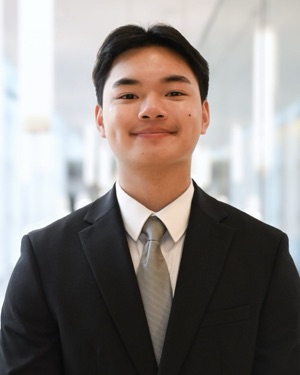
Jonathan Chau in a dark suit and grey tie, photographed in a glass-walled campus building

Background

I have been careful with money for as long as I can remember. I still ask my parents what things cost, mostly to watch how a price moves across a year. What bothered me as a child was that neither option felt right: spending felt wasteful, and holding cash meant watching it quietly lose value. Markets were the answer to that, and eventually so was investing my own, which has a section of its own further down.

Healthcare came from somewhere less tidy. I had a skin condition through most of middle and high school and dealt with it by researching it obsessively: papers on the causes, then making my own formulations from ingredients I had read up on. For a while I thought that meant dermatology. What stopped me was the path rather than the subject. I prefer projects and real work to exams, and another decade of school to do research I was already doing did not add up.

So I looked for the version of that interest that lived in business, and joined the Michigan Healthcare Business Club in my freshman year. Each semester you either take on a consulting project with a real client or build a startup against a healthcare problem. My first client project taught me something I did not expect: consulting is advisory by design, and I wanted to be closer to execution. That is what moved me toward healthcare investment banking, which I am now weighing against capital markets.

I was wrong about one thing in particular. I had assumed finance was largely money-hungry people with a convenient relationship to ethics. What I found instead were people who care about the quality of the work to a degree that is difficult to fake, and who will do what the work requires because of it.

The work

Aug 2026 to present Ann Arbor

Business Development Associate, CreADE

An early-stage creatine wellness startup out of MHBC's venture track. I pitch gym owners, retailers, and supplement companies on carrying the product. Selling something physical to a buyer with no reason to say yes is the fastest way to learn which parts of a plan were load-bearing and which were decoration.

A pipeline of 40-plus prospective partners, worked through in-person pitches and structured follow-up, with the aim of converting sampling into recurring orders.

Jan 2026 to present Ann Arbor

Finance Chair and Consulting Analyst, Michigan Healthcare Business Club

I am responsible for the club's finances: the budget, the sponsorship pipeline, grant applications, and the decisions about what we can and cannot fund. Most of that right now is a November trip to New York for 24 students, visiting Trinity Life Sciences, Simon-Kucher, Kearney, EY, and Zingage. That budget is the live model in the next section.

I have raised $19K in sponsorships, which funds the prize pools for the club's pitch and case competitions. I also built a scoring model that worked through 80-plus biotech and pharma companies for a life sciences recruiting client, to figure out which ones were worth their time.

Jul to Aug 2026 Remote, Poland

Private Equity Intern, Forturum

Forturum is a search fund building a healthcare roll-up in Central and Eastern Europe. I ran the sector research behind the investment memorandum for a Polish physiotherapy roll-up. The estimate I inherited put the sector between 80 and 200 million euros, a range wide enough to be useless. I rebuilt it from the ground up on real local pricing, arrived at roughly 40 million for the defensible core, and checked that against a scaled UK precedent to be sure the answer was not merely smaller but right. Smaller was the useful answer: it changes what a buy-and-build strategy there can reasonably be.

The difficult part was not the analysis. We were interns given associate-level work, and when one person fell behind everyone downstream waited. Keeping the team aligned proved harder than any of the modeling.

I screened just over 400 Polish clinics and returned 74 worth calling, filtered on revenue scale, EBITDA margin, city tier, and whether the owner was near enough to retirement to sell. Python scripts against the KRS court register turned hours of research per company into a single command.
Jun to Aug 2026 New York

Accounting Intern, Miu & Company

Documentation for 40-plus individual, S-corp, and partnership returns, plus bookkeeping, client P&Ls and balance sheets, and state filings. The least glamorous entry here and probably the most useful: reading a large volume of small, real, poorly organized financials is how you learn what the statements are made of.

It is also the job that funded the brokerage account, which is how the market stopped being theoretical for me.

Mar 2026 New York

NYC Spring Break Immersion, University Career Center

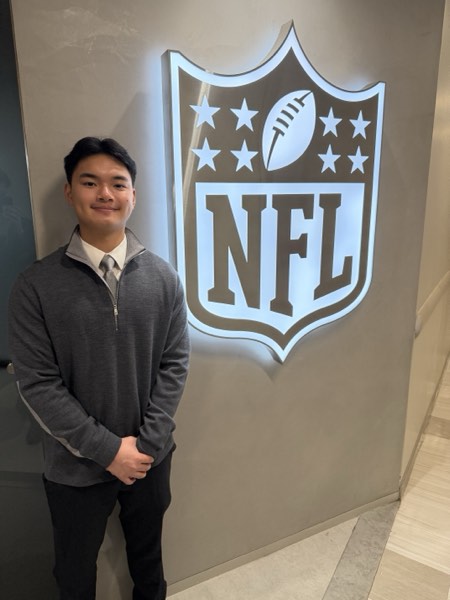
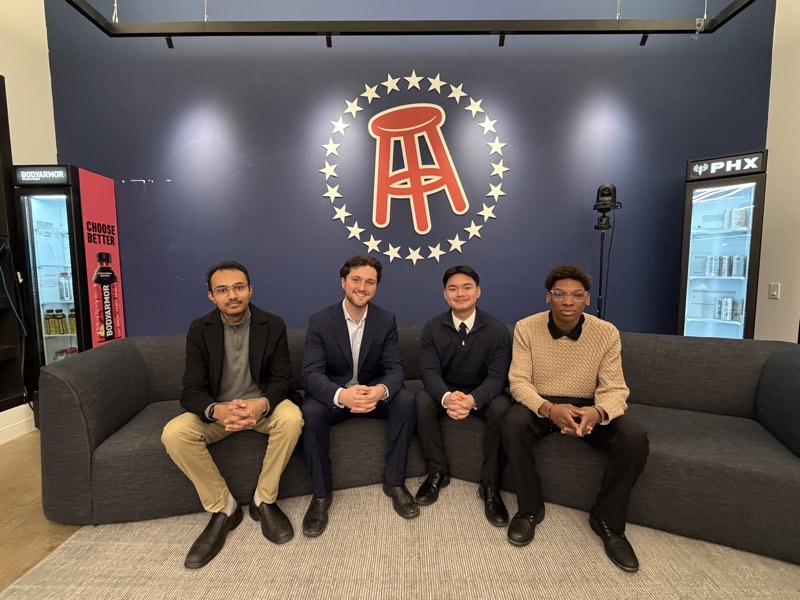
Two days in New York with Michigan's University Career Center, visiting L'Oréal, Barstool Sports, and the National Football League, including the NFL command center where replay reviews are run. Three businesses with almost nothing in common. What stayed with me was how precisely the people there could name the skills that had actually mattered in their careers.

Jonathan and three others at the Barstool Sports office in New York Jonathan beside the illuminated NFL shield at the league's New York office
Barstool Sports and the NFL, March 2026.
Jun to Jul 2024 New York

Finance Intern, Jimmy Crystal New York

The summer I first opened Excel for something that mattered. I built the trackers the finance team used to watch account activity, and the revenue charts the manager brought into client meetings. I was still in high school and somebody was relying on my file being right, which teaches you something a class cannot.

Two years later I am still doing a version of the same thing, with better questions.

Jan to Mar 2024 Melville, New York

Student Visionaries of the Year Candidate, Blood Cancer United

I led a team of 24 raising money for blood cancer research, against a $20,000 goal and seven weeks. We started where everyone starts, with personal asks. People were generous and then the list ran out. So I tracked what was actually converting and found roughly 10% response on cold outreach against roughly 80% on warm introductions. We dropped cold outreach almost entirely, moved onto referrals, and then onto corporate grant programs, where the ask was not personal at all.

We finished at $46,025, a little over twice the goal. Six corporate sponsorships made up more than $25K of that, and the largest single gift was $15,000 from Hertz.

Show your work

Below is the budget for that trip, running live. I built the file and I own the number. Every assumption in it is arguable, so each one is exposed: change an input and the outputs recompute.

The finding that made it worth building: the trip is fully funded for the year and still runs out of cash in November, because $2,000 of the $7,000 committed does not arrive until after we return.

24

Confirmed attendee count for 11 to 13 November.

6

ROW NYC Superior Two Doubles, maximum 4 guests per room.

2

Wed 11 and Thu 12 November. Check-out Friday at noon.

$141

A verified July 2026 stay averaged $184. Less the 20 to 30% direct-booking discount gives $129 to $147. Unconfirmed in writing.

$100

Upper end of the $50 to $100 range committed in the trek memo.

10%

Applied to programming outflows excluding the airfare subsidy, which is a fixed committed amount.

December receipt timing

$7,000 is committed for the year. $2,000 of it settles in December, after the trip.

Friday return to LGA

The Q70 is fare-free and only the $3.00 subway connection is charged. I ruled it out for the arrival because arrivals are staggered through the evening, and I was not willing to put students through a late bus-to-subway transfer alone with luggage. In Friday daylight it is viable.

Cash position, November

Short before the trip. The year is funded; the timing is not.


Total MHBC-funded cost
$6,720.33
Cost per student
$280.01
Committed inflows
$7,000.00

Defaults are my live assumptions as of September 2026. The $141 room rate is still an estimate I have not had confirmed in writing by the hotel, which is why it is an input here and not a fixed number.

Markets

I began investing my own money in the summer of 2026, after my first paid internship. The account is small and the strategy is deliberately unclever, but it is the thing that turned an academic interest into a daily one.

About 60% of what I earned at Miu & Company went into a Roth IRA and a taxable brokerage account. I buy and hold. My horizon is long and I have no edge worth trading on yet, so I would rather spend this period understanding what I own than trying to be clever with it.

What I did not anticipate was the effect on my attention. Before I had money in the market, reading about it was homework. Now I read the Wall Street Journal's markets section most mornings and listen to Goldman Sachs's markets podcasts on the walk to class, and when something I hold moves I want to know why.

The policy question I have followed most closely is the Fed under Chair Warsh, who has moved away from forward guidance and declined to spell out a reaction function. That leaves the market less to anchor to and more to infer from the data directly. I have not settled on whether it is an improvement, but I find the case for it genuinely interesting, which is not something I could have said about monetary policy two years ago.

Beyond rates, the areas I follow most closely are healthcare, which is where my work sits, along with AI memory and the consumer sector.

Inside the account itself I am still working things out: how dividends and DRIP compound in practice, how an ETF behaves differently from a single position, and the difference between selling inside the account and taking money out of it. Real money makes those mechanics stick in a way that reading about them does not.

What I'm learning right now

The honest version is that I can find a number and defend it, and I am still building the fluency that makes it quick. Two things this fall.

Technicals

I have been through accounting, enterprise versus equity value, DCF, merger models, and LBOs. I can recall them. I cannot always tell you why the mechanics work the way they do, and memorized is not the same as understood.

Direction

I am weighing healthcare investment banking against capital markets. I know what draws me to each and I do not yet know enough about the daily reality of either to choose well. That is a question I would rather resolve by talking to people who have done both than by reading about it.

Why Recalc

I came across Recalc late, through Dylan Pinkins, and then looked into it properly myself. I watched the Fall 2026 information session, and what convinced me was the way Katie described the program. Most things aimed at students like me are recruiting help with a short shelf life. That is not how she described this one, and I believed her.

What I want from the Finance Accelerator is specific. Almost everything I have built lives in documents: memos, decks, scoring rubrics, a grant application. They were good enough because nobody needed to open them and change an assumption. I have the technicals memorized without the intuition underneath them, and reading another PDF alone will not fix that. Sitting in a live session where somebody watches me build and tells me where the model breaks is a far faster path.

As for what I would bring: I am the person who volunteers for the budget. I am also the person my friends call when something goes wrong, which has mattered more inside a team than I expected it to. I have taught myself enough to be useful and not enough to be comfortable, which seems a reasonable place to be learning from.

Outside the work

Since second grade

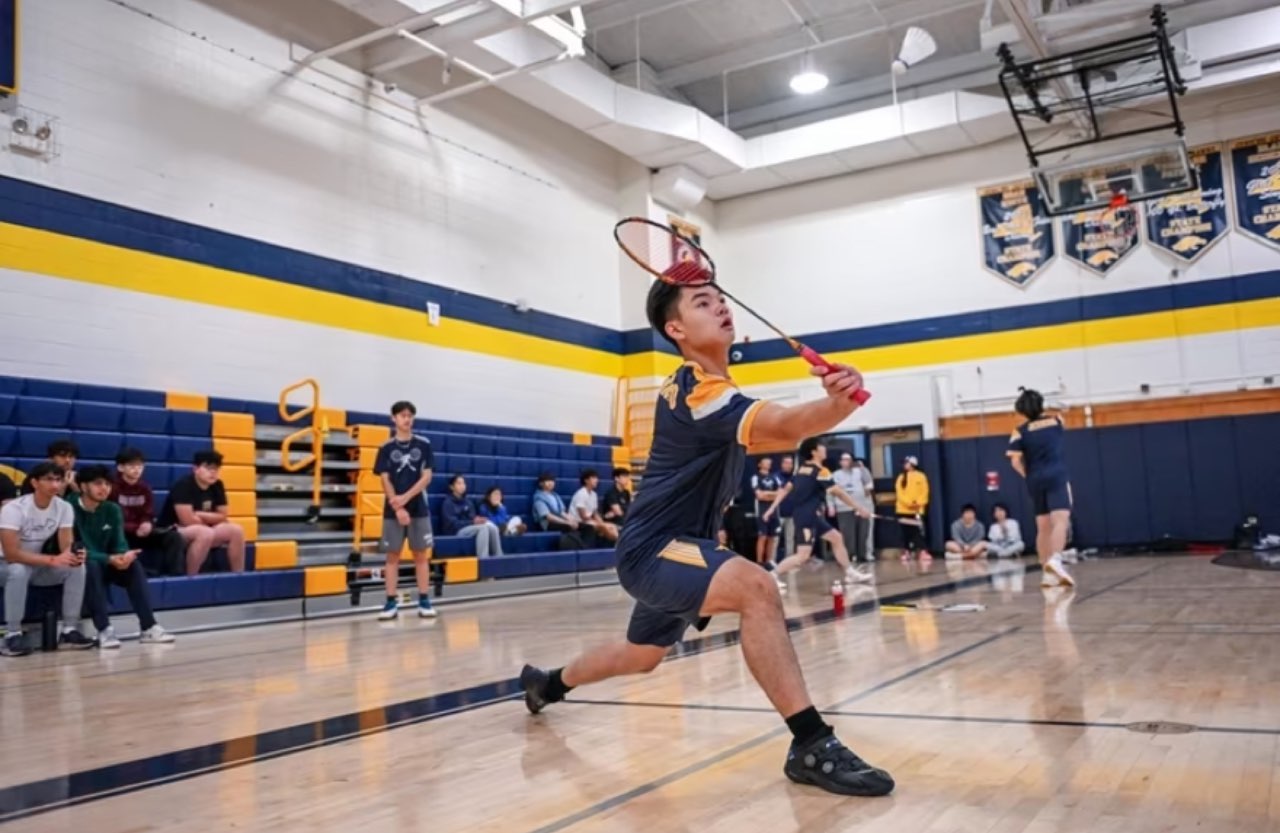
Badminton

Jonathan mid-lunge, racket raised, returning a shuttle during a match

I started in second grade and have competed ever since. Four-time Long Island team champion, twice Nassau County doubles champion. What stayed with me was the doubles court rather than the winning: being accountable to the person beside me, and backing them when a match is going badly.

Founded

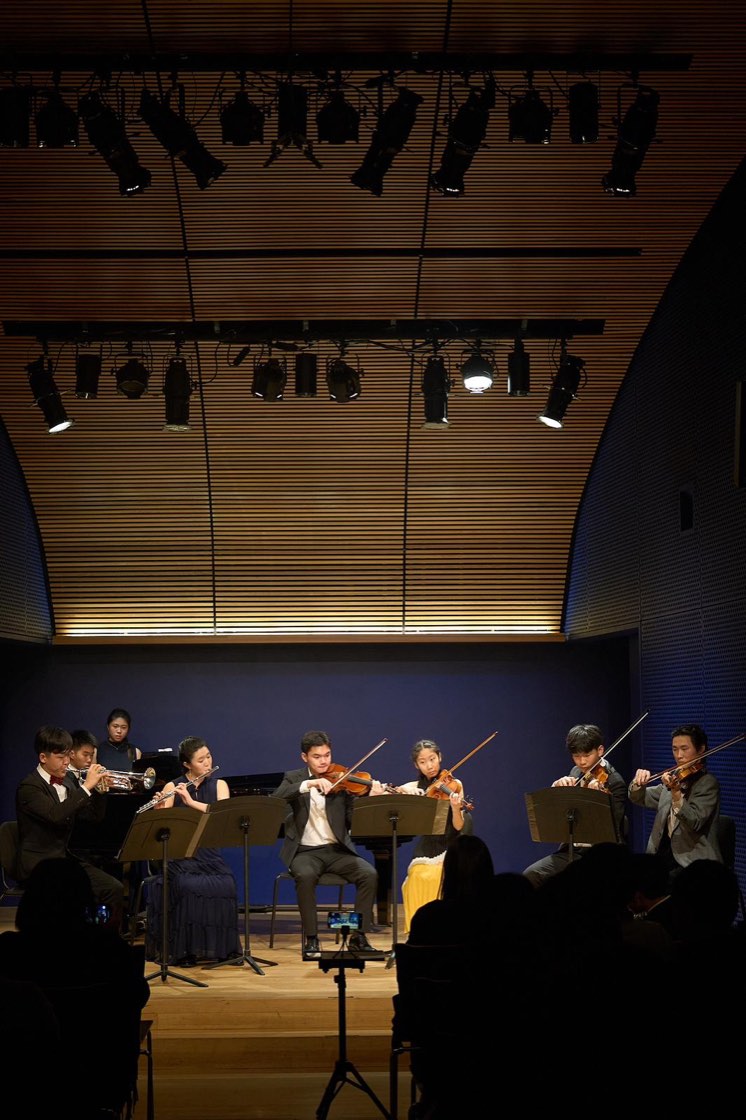
Think Symphony

Think Symphony performing on a lit stage: trumpet, flute, violins, viola and piano

I play piano, violin, and viola. I started Think Symphony because a piece sounds better with more instruments in it, and because working through a hard passage with other people beats grinding at it alone. We began playing for friends and family at local events, then at nursing homes, and eventually started reserving auditoriums in New York and playing for whoever came. Everything moves quickly. Music is one of the few things that slows it down.

Saturdays

Saturdays

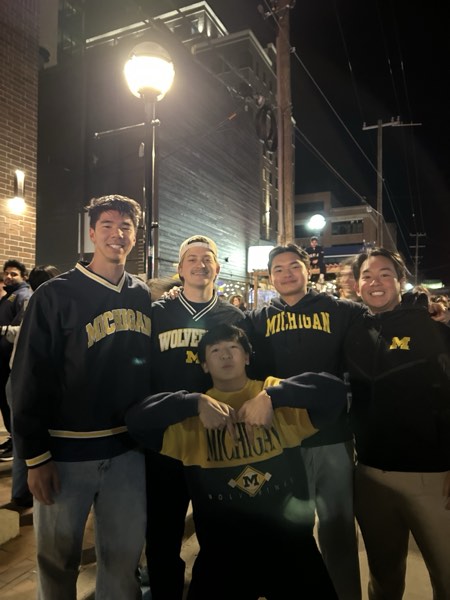
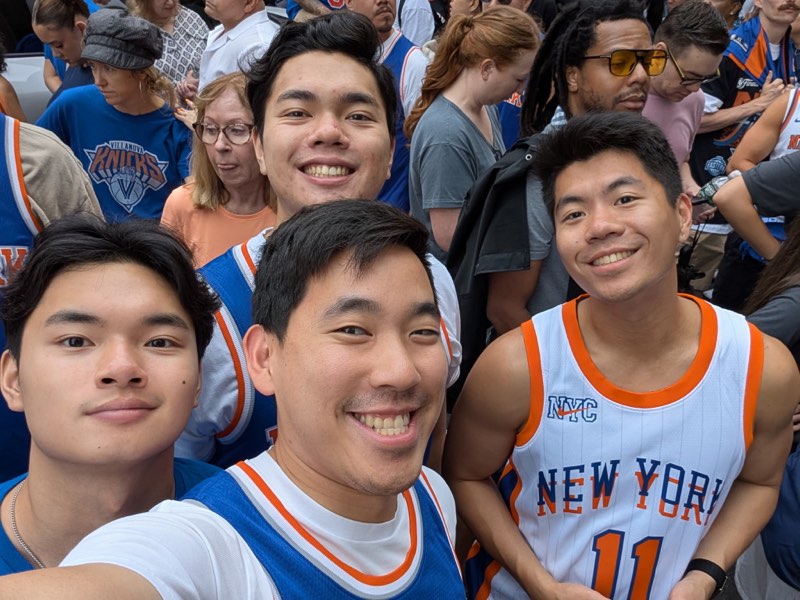
Jonathan and four friends in Michigan gear on a street at night after a game Jonathan and three friends in Knicks jerseys in a crowd outside the arena

A free Saturday is usually a game with friends. Otherwise I am working, because this feels like a period in which falling behind compounds. I am also a lifelong Knicks fan, which has taught me more about sitting with disappointment than about winning.

Also

Crabbing and fishing

On Long Island, since I was small. Still the one thing that reliably gets me away from a desk.

The part that isn't on my resume

Investment banking was never supposed to be the destination. I want it for what it teaches: a framework for looking at a business, the people, and the habit of forecasting well enough that you can see a risk before it arrives. What I actually want, eventually, is to run something. Probably a roll-up.

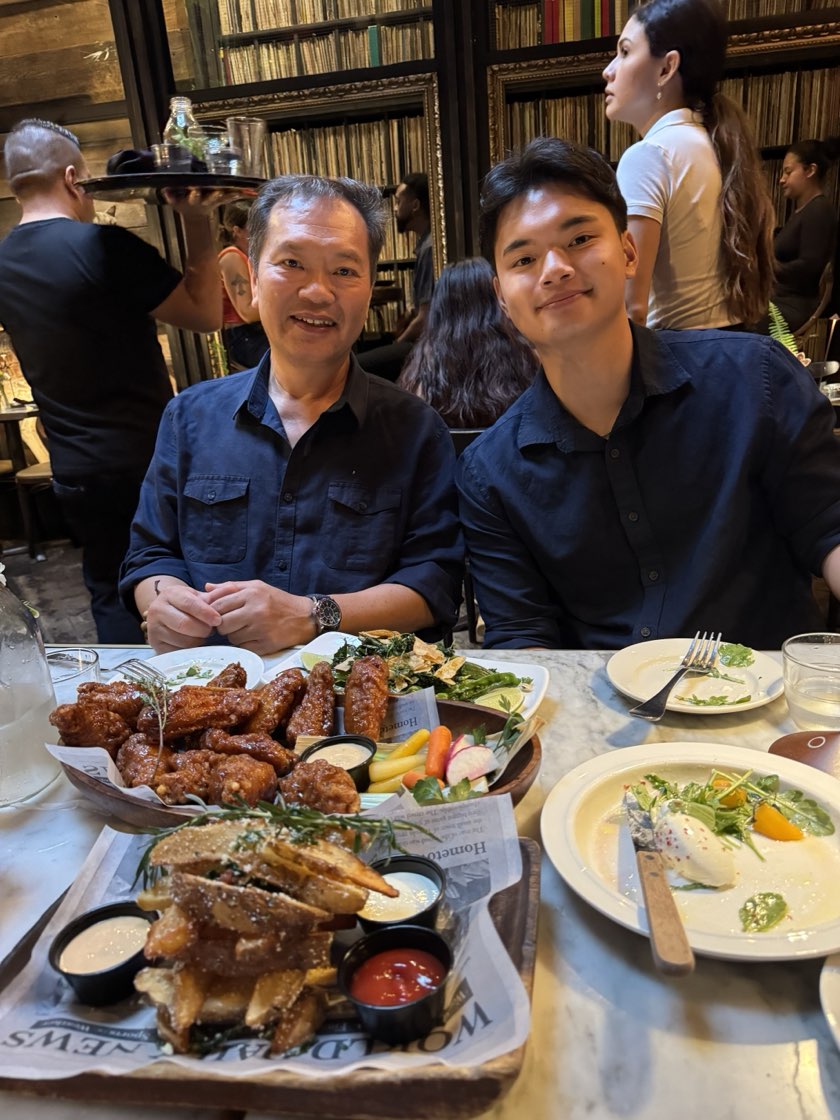
My dad has been an entrepreneur for over thirty years and has owned several restaurants in New York. He never got to go to university. What he knew about running a restaurant was what his parents handed down to him, and he built a lot on that. I have since spent real time on restaurant margins and I understand now why what he was doing is so hard to scale.

Jonathan and his dad at a restaurant table, a plate of wings in front of them

I do not think he was missing intelligence or effort. He was missing a framework, and a framework is a learnable thing. That is most of why I am doing any of this. Banking teaches you to ask the correct question instead of the smart-sounding one, and I would like to bring that home.

One other thing. I was admitted to Michigan and rejected from Ross. At the time it felt like the rest of college had been decided before it started, and it still lands a little when someone asks whether I am in Ross. Where I have ended up is that the program you get into sets a starting position and not much else. Everything on this page happened outside of it.